
ITC 32. EducAItion
Plus new sketches and recommendations
If you’ve survived the summer temperatures in Europe so far, it’s quite possible you’ll make it to September. Congratulations! If you live somewhere else, I hope summer is being gentle to you.
(Note→ If you’re new here or wondering why you’re receiving this: I’m Raúl and you’re receiving this email because at some point you signed up to the In The Cave Substack newsletter).
→ Reflections
One of the most counterintuitive things I’ve come across this year has been seeing how extensively my son’s high school teachers use generative AI. They use it to translate texts with surprisingly clumsy results, to prepare exams, and to structure and design reports and assignments. This includes both text and image creation. In fact, in one specific subject (literature!), students have been directly encouraged to use these tools.
What is the reasoning behind this?
If the idea is: “Why not make my life easier by using these tools that are available to everyone, and work much less?”, my answer is:
I understand your situation and your student’s are different. Young people are in a formative stage, and they need to learn and work on the basics. But I also know this is 100% what kids read: “My teachers use AI because they don’t care enough, not because they’re smart. Should I care?”
If the idea is: “Students need to learn how to use these tools for their future,” my answer is:
Whatever you teach them today around AI will be obsolete soon.
Young people don’t need classes on how to use AI. If they need to, they’ll learn to use it in a fraction of the time it took you. And tools are going to be more and more accessible and easier to use.
If you believe this is what you should focus on as an educator, perhaps it’s time for you to reflect on your own purpose.
The future
But curiously, I see studies from teachers outraged by their students’ frequent use of AI in their schoolwork. Students who are unable to achieve better results on in-person exams. Shocking.
So I wonder: what do we want from schools? If what we want is people who understand the power of listening, understanding and finding solutions, and who appreciate knowledge, human creation, and innovative ideation, perhaps we should keep AI out of the classrooms and teach them more valuable things. More about the whys. We need them to ask good questions and challenge things. And I don’t think teachers, mentors, and parents are setting a great global example for new generations.
But some people will say: “No, no, no… that’s not what the educational system is for. We just want better workers for the current and future market”. And this is something that puzzles me: in the mentioned studies, we can see students having a 10/10 in home-made projects, and a 0/10 on in-person exercises and exams, in theory because of their heavy use of AI to solve their assignments.
Historically, this person would have been considered incompetent. It seems it’s still the case. But isn’t that precisely the behaviour desired and demanded by many companies right now? To be able to deliver something that meets a specific need, with the least possible effort, time, and budget, using the available tools? So: are these students less or more valuable to the world that awaits them? Aren’t there conflicting signals here for young people?
Let me know what you think!
P.S.: Fable is a semi-legendary video game saga that is about to receive a reboot by Playground Games in 2027, NOT an AI model. Remember that 🫵
Sketch time!
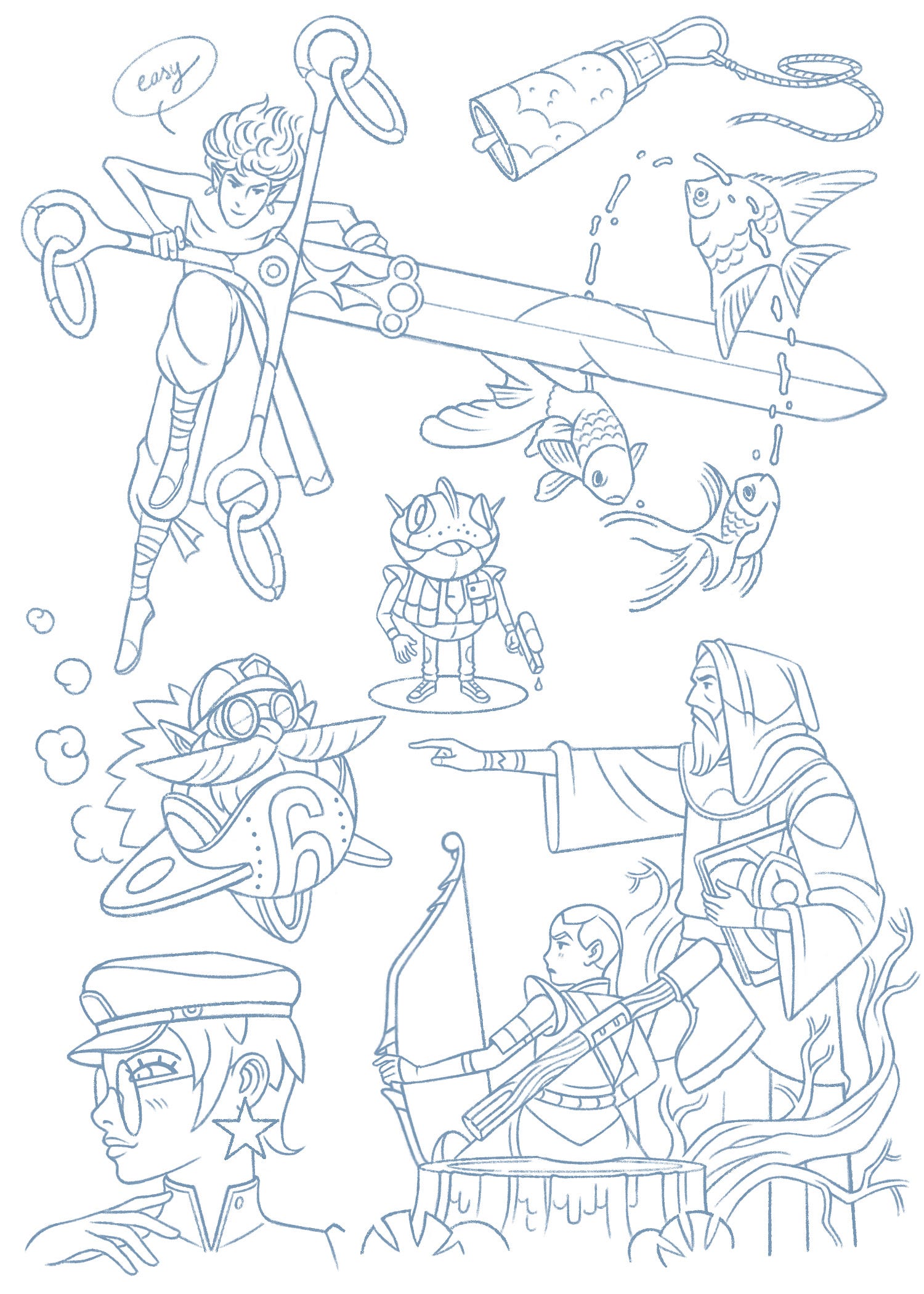
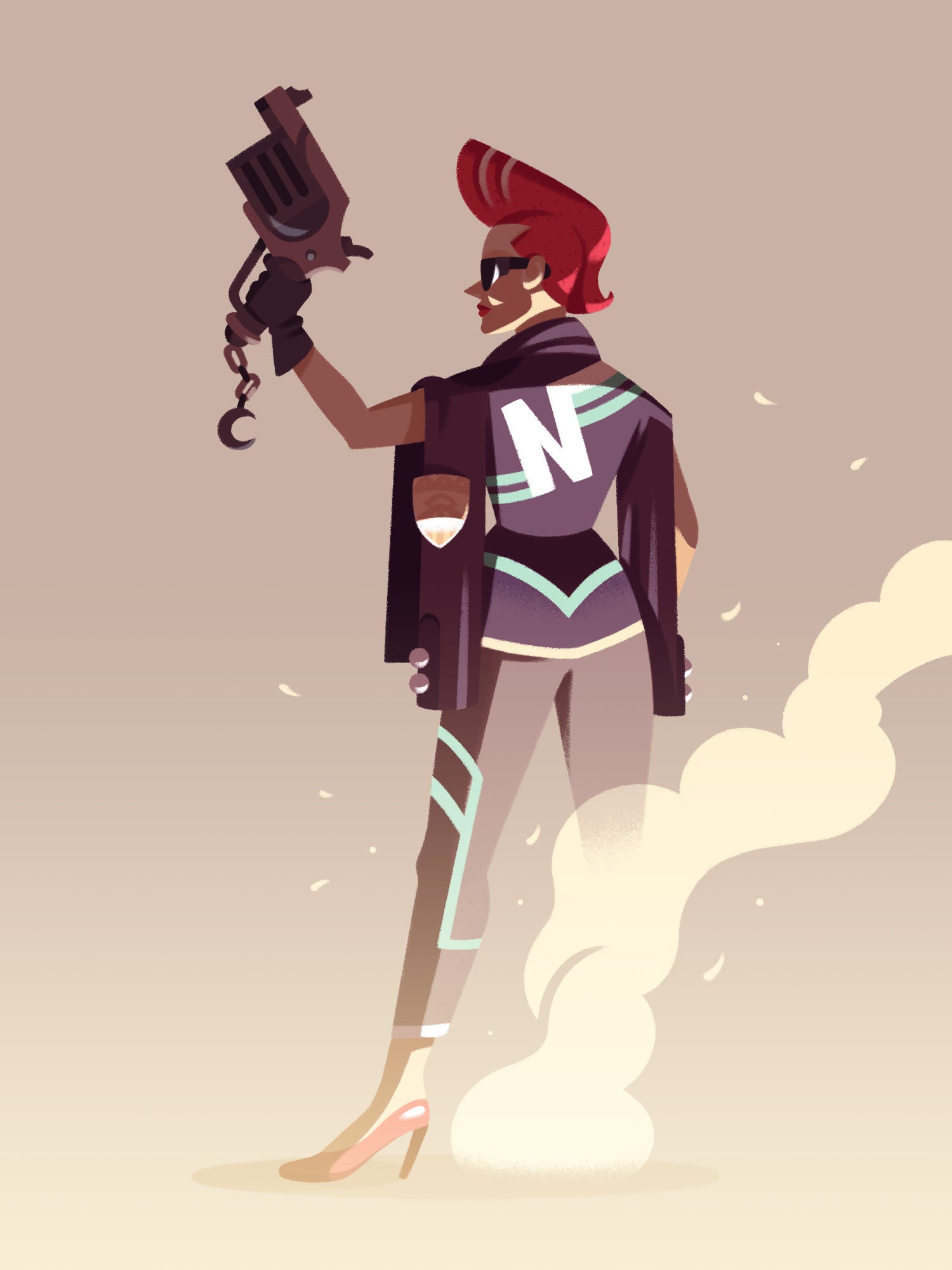
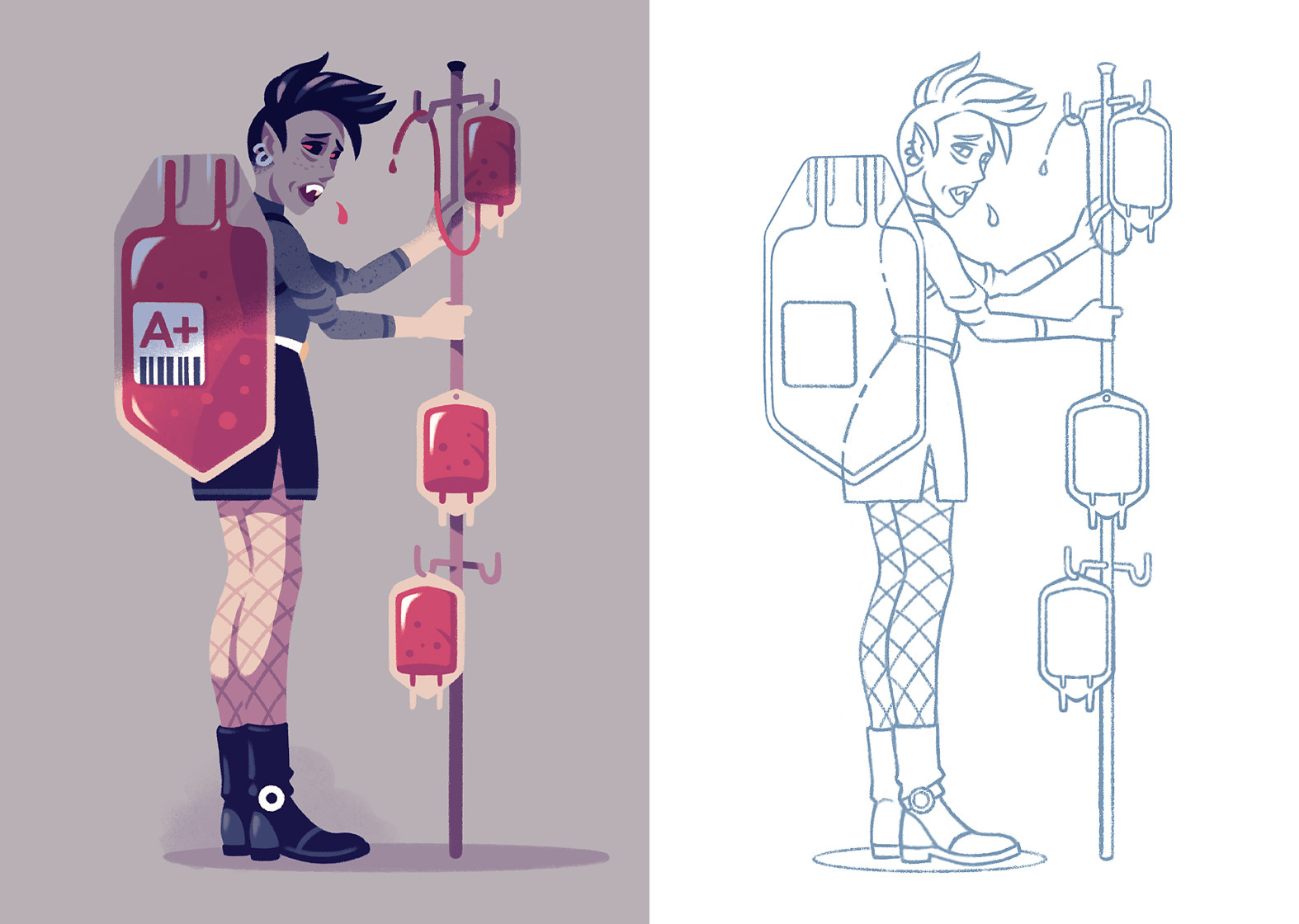
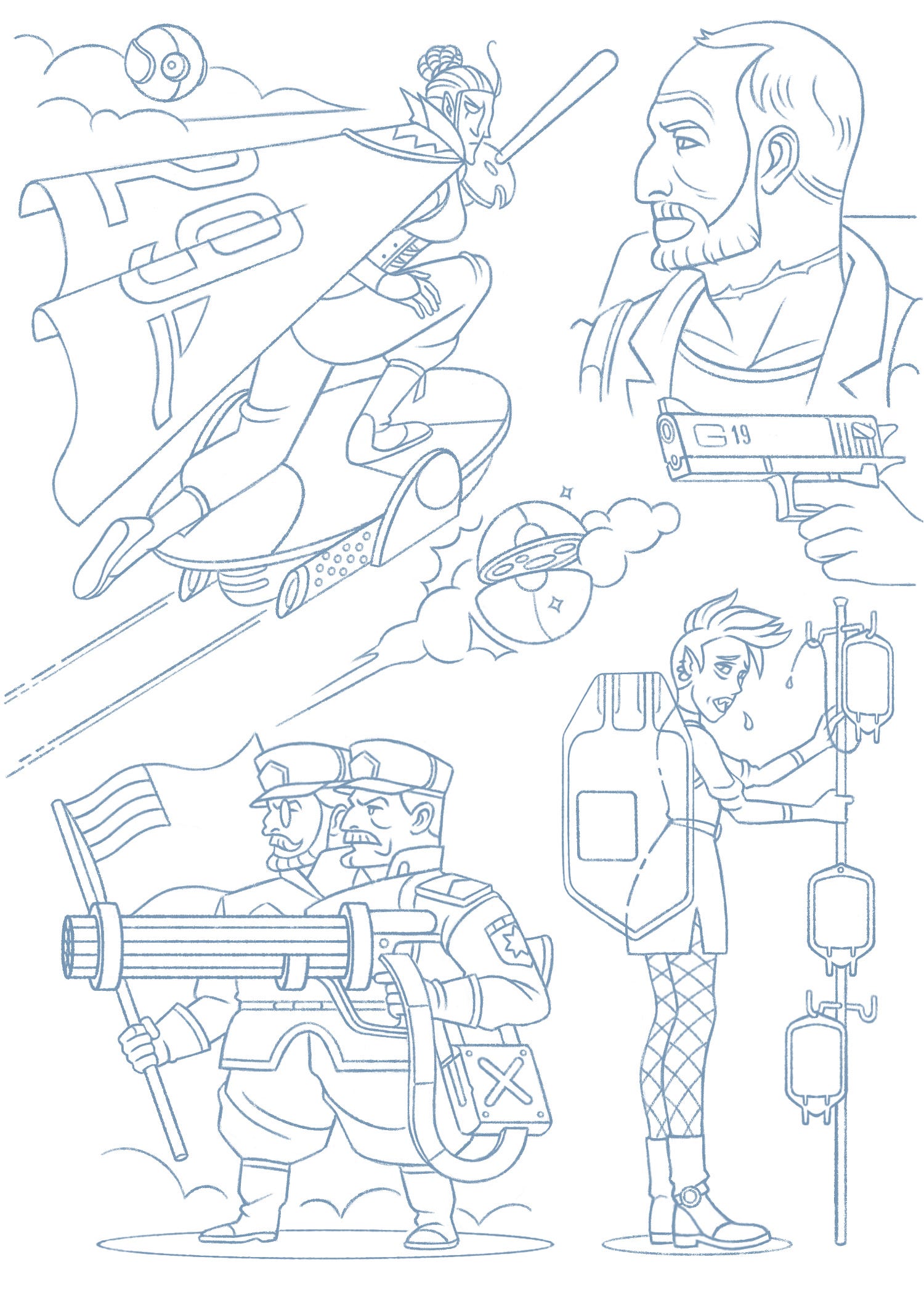
As usual, let’s start with some sketches from the past weeks/days. Double dose! Barely five pages left to close the sketchbook 🫡
🔖 This month’s recommendations
1 → A comic book: Universo 2 by Albert Monteys
I recently bought the second volume of this ingenious series of short science fiction stories by the much-admired Albert Monteys, one of the best contemporary Spanish comic book artists, with a long and distinguished career in graphic humor.
And as with all good science fiction, the stories in Universo invite us to reflect on the present and the future. Sometimes they warn, sometimes they predict, sometimes they simply theorise. Albert’s skill as a storyteller is beyond question, and it’s a pleasure to read and admire his work.
Although I’ve actually bought most of the Universo chapters as they’ve been published as digital comics by Panel Syndicate, Astiberri’s editions are so good that I love having them all collected in volumes. Extremely recommended. You can find physical editions of Universo 2 in Spanish and Catalan, and a digital edition in English.
2 → A game: Card Crawl 2
Tiny Touch Tales, aka Arnold Rauers is one of the most successful and longest-running independent developers in the mobile landscape. His projects, generally card games with exceptionally well-designed gameplay systems, represent the perfect balance between auteur games and casual experiences for broad audiences.
He hasn’t been afraid to experiment with multiple business models, and many, many years after his first Card Crawl, his machine is still running with Swiss precision. Card Crawl 2 represents (in my opinion) the ultimate evolution of his solitaire-style gameplay concepts set in fantasy worlds. A virtually endless game that always invites you to play more.
3 → A font: Mono Spec

I have a special admiration for quality monospace fonts. It’s so difficult to make them work without repeating the same patterns as hundreds of other fonts… Mono Spec is one of the best monospace fonts with a mechanical-industrial feel that I’ve seen in recent years. It only works in uppercase, but its greatest virtues lie in its subtleties. Very legible even at very small sizes. Buy it right now. €90 for a single-user desktop license if you get all the styles.
4 → A film: Akira (4K Re-release)

Is it necessary to recommend Akira, almost forty years after its original release? It’s not a film that needs reappraisal. I believe it remains a cinematic masterpiece, one that has influenced several generations and feels as powerful today as it did then. A 4K remaster was released some years ago in cinemas, and it’s been re-released recently in some countries. I finally could watch it on cinema and I will remember it forever. So if you have the opportunity, don’t miss it!
Katsuhiro Otomo hasn’t directed many films, and he’s 72 now. It seems quite possible that this monument to human craft that was and is Akira will end up being his definitive work.
5 → An artist duo: Icinori

Icinori is the artistic name under which illustrators Mayumi Otero and Raphael Urwiller work near Paris. They met as students in Strasbourg and decided to join forces professionally, a path that is honestly not very common in the world of illustration.
I think they have developed a very distinctive and recognisable visual language, which is also much more flexible than it might seem. I particularly like their semi-abstract compositions and colour palettes. Their work has reached top brands such as The New York Times, Louis Vuitton, The New Yorker, Wired, Forbes, and many more.
6 → Music: I Took a Ride by Caroline Rose
I discovered Caroline Rose through a popular live stream that you can easily find on YouTube. I loved the simplicity of the performance, the low-key production, and the venue where they performed. And of course, the journey that this particular song represents. Beautiful.
Thank you for reading In the Cave. Currently, I’m using social media just to promote this newsletter, share other people’s work or send memes to friends. Nothing else. So if you like this newsletter, please share it and recommend it. You can also find me on my website.
See you soon!
Read a previous story:

AMÉN (y porque no puedo ponerlo más grande que esto) a las reflexiones que haces sobre el uso de la IA en los entornos formativos, Raúl.
Cualquier persona que haya estudiado de manera más o menos continuada, sobre todo la que se ha formado en disciplinas dispares, acaba descubriendo que una parte muy importante del aprendizaje tiene que ver con elementos menos centrales en sus intereses (llamémoslos complementarios): maquetar un documento, realizar un esquema o dibujo, procesos de documentación, nociones de otros lenguajes...
Estos conocimientos «tangenciales» me parecen más imprescindibles incluso que los «troncales», porque es bastante probable que acabes dedicándote a otras cosas (por elección o necesidad), y estas habilidades complementarias acaban funcionando como intersticios de conocimiento que te permiten afrontar nuevas situaciones en contextos distintos de los que te habías planteado. Y a resolverlos con recursos intrínsecos.
Creo que nos estamos dando cuenta bastante rápido de los efectos perjudiciales de la IA en ese sentido, y de lo necesario que es paliarlos.
Unbelievable that teachers are doing this! How discouraging!