
ITC 21. Cult-worthy
Monthly Recommendations

Welcome back to In the Cave. This time with another Special Summer Recommendations edition. Have you already noticed the days getting a little bit shorter? It's summer saying: “Be careful, I can already see the beginning of autumn in the distance, on the horizon…” (Snif)
→ Reflections
I was recently discussing with a colleague that, regardless of the medium, I am pathologically attracted to works that we might consider flawed, imperfect, or even catastrophic, but which contain something within themselves that (I think) makes them interesting or even fascinating.
I feel like that's the difference between masterpieces and cult works. Masterpieces tend to be paragons of virtue. Impeccable. Works that pave the way, sometimes even for generations. Whereas cult works are... well, works that have a following, that inspire respect, admiration or surprise, but they often carry a semi-hidden label of negativity, usually associated with poor formal solutions or questionable morals, among other things.
Is a cult film/game/book a good film/game/book? Not necessarily. But we approach them, and we remember them, I think fundamentally because most of them broke conventions. They dared to tread uncharted or at least uncomfortable territory. And they did so with cunning and heart. Often with more ideas than resources. Most cult works were never intended to be so. I think that status is achieved through unpredictable means.
This can be summed up as follows: I prefer a Carpenter to a Coppola, a Corman to a Spielberg, or a VtM Bloodlines to a The Witcher. (Enough, enough with the booing! No, no more hitting, please!) 🫣
→ Intermission: Sketches
This time, a very short sketches intermission. This one dedicated to Rhys. To new beginnings! 🥂
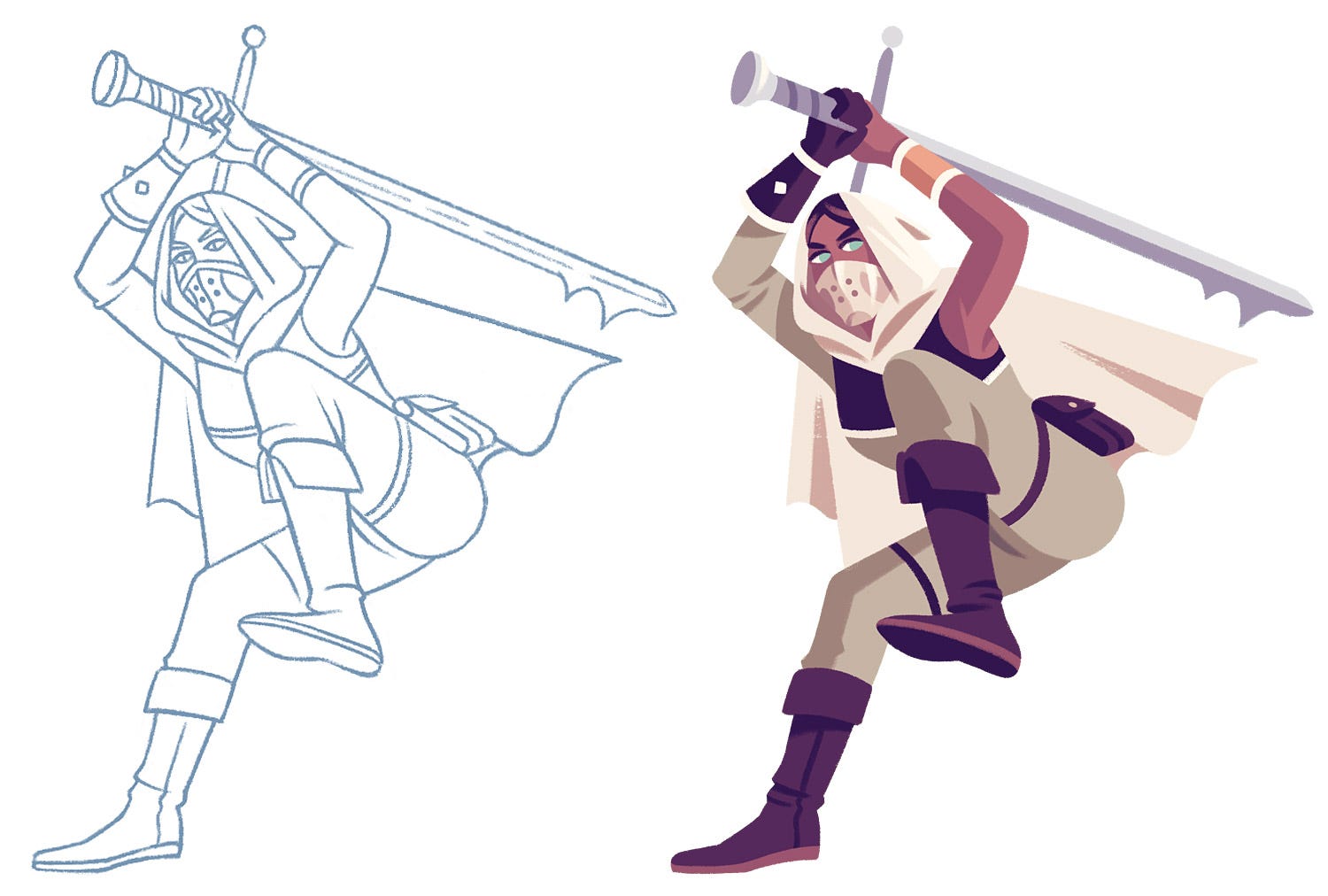
And now, time for this month’s recommendations…
Recommendations
1 → A game: Alchemist’s Alcove by FartFish
A small game that I’ve loved because it naturally touches on all the themes that interest me. Essentially, it's a dungeon crawler in which our little alchemist has a limited inventory space in which to accumulate materials found on our adventure (or pieces of our defeated enemies). With these, we can create combinations of elements that result in tools, spells, or other items, which we can then use in combat.
The balance lies between the enemies you defeat, the combination of items you accumulate, and inventory space. So there’s an strategic component. It's currently in development, but I've loved it so far. The game is being developed using Godot and its demo is playable on itch.io and downloadable for PC or Mac, but it’s coming to Steam.
2 → A film: Inu Oh (2022) by Masaaki Yuasa

I don't consider myself a huge Yuasa fan. I didn't particularly enjoy his Devilman Crybaby, despite the cult following the series. But it's undeniable that he's a creator who has made his mark. Inu Oh fascinated me with his initial approach, and watching the entire film left me truly spellbound.
How to explain the story? Inu Oh is a boy born with aberrant malformations that make him a nameless outcast from birth. People run away from him and feed him like a dog. However, his curious anatomy makes him a graceful dancer with a unique voice.
On the other hand, Tomona is a boy who was blinded after recovering a cursed object from the sea. After his father's death, he joins a Biwa Hoshi group and becomes an excellent musician.
Thanks to Tomona, Inu Oh learns to listen to the stories of the many spirits around him who are linked to his own curse, and this makes them both flourish artistically, subverting societal prejudice to become cultural icons. But power, tradition, and the established order have a lot to say about it...
Much of the film is a blend of kabuki, traditional Japanese music, performance art, and contemporary rock, with no small number of references to modern artists. But there’s also space for history, spirits, legends and magic. Little has been said about the many parallels between Inu Oh and Hyakkimaru from Tezuka's Dororo, by the way. A film for lovers of extravagance and truly alternative proposals.
The character designs were done by the inimitable Taiyo Matsumoto (Tekkonkinkreet), and it shows. Part of the visual work has been captured in a guidebook/artbook available in Japanese and not very easy to obtain from Europe, but which I'm very tempted to find. It's hard to pinpoint where to find Inu Oh, given that copyrights vary depending on the territory, but you'll surely find it.
3 → A comic book: Shoplifter (2014) by Michael Cho

Shoplifter may be one of the comics I've recommended the most. It was published in 2014 and marked the debut as a complete author for Michael Cho, an extraordinary illustrator and cover artist. Michael may be one of the artists who best understands the language of a cover in the superhero industry.
Shoplifter makes us spectators of a brief fragment of time. The period in which Corrina Park must make a decision about her present as a jaded copywriter for the advertising industry, and her future as an author, to which her heart strongly compels her. A first read will leave you feeling like you've barely read the prologue, but that's precisely its value. A short story about THE decision. The one that can completely turn your life around.
Fantastic bi-tone in Cho's usual beautiful style. A work also blessed by the legendary Chip Kidd. Published by Pantheon.
4 → A couple of quotes
I love child things because there’s so much mystery when you’re a child. When you’re a child, something as simple as a tree doesn’t make sense. You see it in the distance and it looks small, but as you go closer, it seems to grow — you haven’t got a handle on the rules when you’re a child. We think we understand the rules when we become adults but what we really experienced is a narrowing of the imagination.
(…) a person needs new experiences. They jar something deep inside, allowing him to grow. Without change something sleeps inside us, and seldom awakens. The sleeper must awaken.
Both of them by master David Lynch.
5 → A newsletter: Animation Obsessive
One of my favourite newsletters on Substack. And probably the current best publication about the animation industry. Its extensive, exceptionally well-researched articles on specific topics of enormous interest to the industry are accompanied by frequent updates on the latest developments in international animation. Let me suggest some recent articles that may give you a clear idea of the value and nature of the newsletter:
6 → An interesting article: Leica’s Engraved Fonts
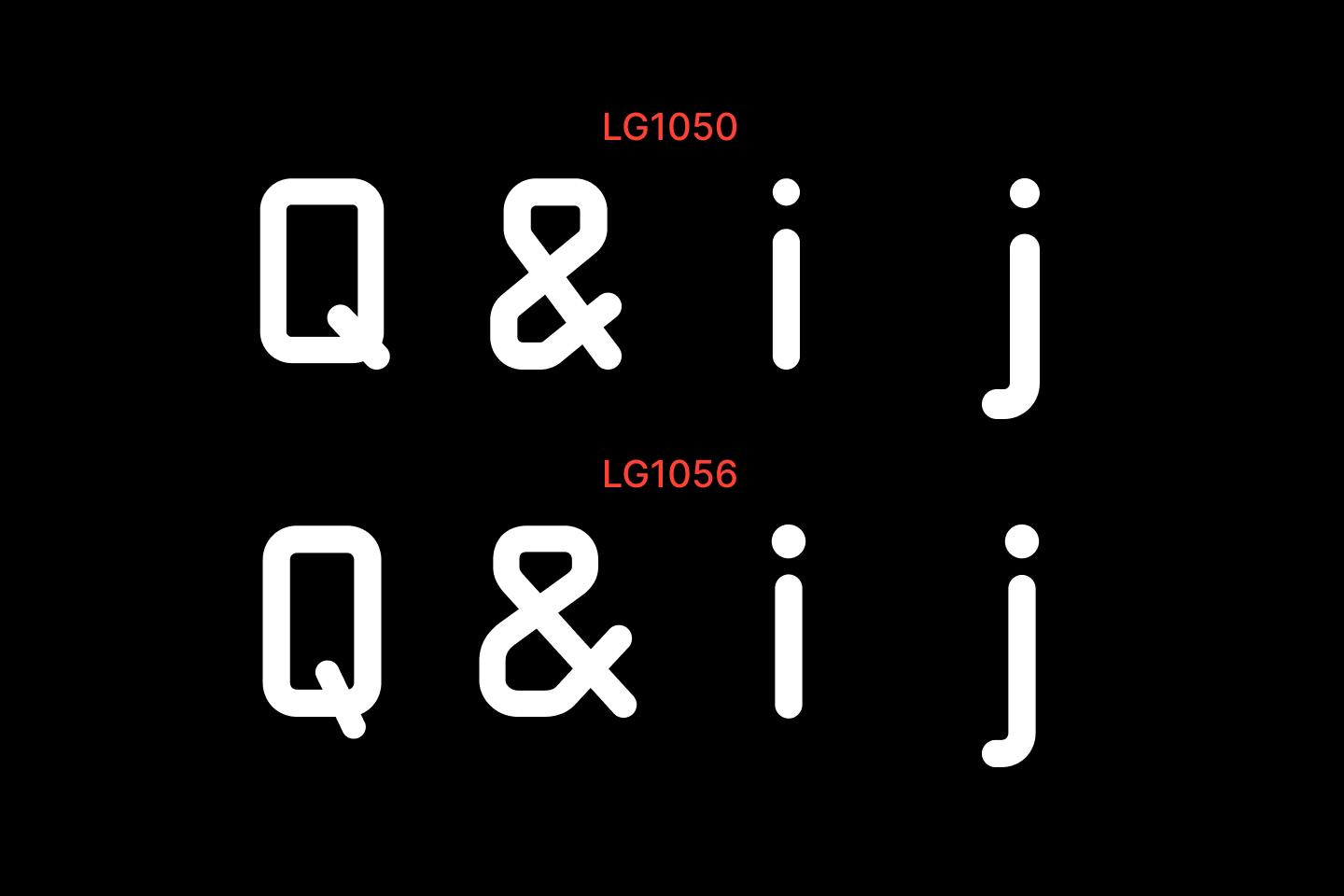
For fans of typography and photography. An article from a few months ago from designer Arun Venkatesan's highly recommended blog. I've met a few designers who have created personal fonts inspired by Leica's engraved fonts, but this article specifically talks about the fonts used by the company and how they've been adopting custom designs from the original DIN fonts, adapting to new technical requirements linked to their production systems.
7 → Artists
Satoshi Kon

I think Satoshi Kon is definitely the Japanese film director I feel most connected to. I don't think he's the best, nor the most prolific, for obvious reasons, but he's the one with the sensibility that most closely matches my personal preferences. All of his works, very different from each other, bear his unmistakable stamp, replete with his aesthetic and thematic obsessions. And his drawing skills... what a great all-around artist. And what a great group of creators came together at the time: Otomo, Kon, Morimoto...
Unfortunately, cancer took Kon very prematurely at the age of 46. It makes one think... beyond his impeccable work as a screenwriter and animation designer for the industry, he left behind four very personal author works (plus a TV series) that undoubtedly form part of the contemporary history of Japanese cinema and animation in general. Geniuses like Kon make most of us feel small in terms of our contribution to the world.
Take this advice: set aside time this summer to do a thorough revisit of Kon's complete works, starting with Perfect Blue.
This issue's featured newsletter, Animation Obsessive, has a special dedicated to Kon that's a must-read. Highly recommended.
Shane Glines

Shane is another of the essential figures who worked alongside Bruce Timm, Glen Murakami & co. on Batman: The Animated Series. At the time, he was a young character designer, heavily influenced by Timm, but also by the same classic references that interested them both, especially American cartoonists from the 20s, 30s, 40s... Over time, he became distinguished by a slightly more cartoonish, simple, and extremely clean style, which began to make him recognisable in the world of animation.
His obsession with form is evident in some of his talks on YT. A cartoonist who doesn't hide formal weaknesses under ambiguities. Something I deeply respect.
His work has left his personal mark on series such as Batman: The Animated Series, Batman Beyond, Beware the Batman, Justice League: Action, Harley Quinn and Poison Ivy, and even the second season of Caped Crusader, among many others. His art books are well worth a read if you like his beautiful and very, very abundant pin-ups.
Leo Espinosa

This Colombian artist, who lived in Spain for a time, is one of those artists capable of creating something beautiful with two spots and two strokes.
Although the bulk of his work focuses primarily on children's books and editorial illustration, I particularly like the independent pieces he creates from time to time, and their boundless beauty and sensitivity. And the looser his strokes, the smaller his palettes, the less defined his details, and the more spontaneous his forms, the more I love what he does.
Unfortunately, his current website doesn't feature a formal portfolio (at the moment), and for the time being, we'll be forced to consult his profile on Instagram, an app that used to make sense for artists, a long, long time ago. Now, it's a cesspool of stupidity and distractions. Leo deserves better.
Nov 2025 Edit: Leo does have a cool new website here ☺️
8 → Music
Two songs from the same year, both sharing some traits. Stylish, enigmatic, nocturne… Enjoy them!:
Tobacco Slide by Goloka (2007)
Signs by Ikon (2007)
PLUS a heavily Sci-Fi-inspired Synthwave album recommended by our Reedsy pal, Jérôme:
Invaders by Hollywood Burns (2018)
Thank you for reading In the Cave. Currently, I’m using social media just to promote this newsletter, share other people’s work or send memes to friends. Nothing else. So if you like this newsletter, please share it and recommend it. You can also find me on my website.
See you soon!
Read a previous story:

¡Guau! Menuda newsletter. Para tratarse de una versión veraniega viene bien nutrida. Me han interesado mucho tus comentarios sobre película Inu Oh de Massaki, que ya ha pasado a mi lista, y tu definición sobre el cine de culto en comparación con las masterpieces; creo que lo has definido de coña. En las obras de culto siempre hay algo incómodo, exigen un peaje que, paradójicamente, acaba convirtiéndose en parte de su atractivo. Y sigo deseando saber más sobre tu libro de sketches, por supuesto.